Guest Talk: From classrooms to regions: the scale of inequality and educational aspirations
Date and Time
CGA Brown Bag presentation by Crhistian Joel González-Cuatianquis
Abstract
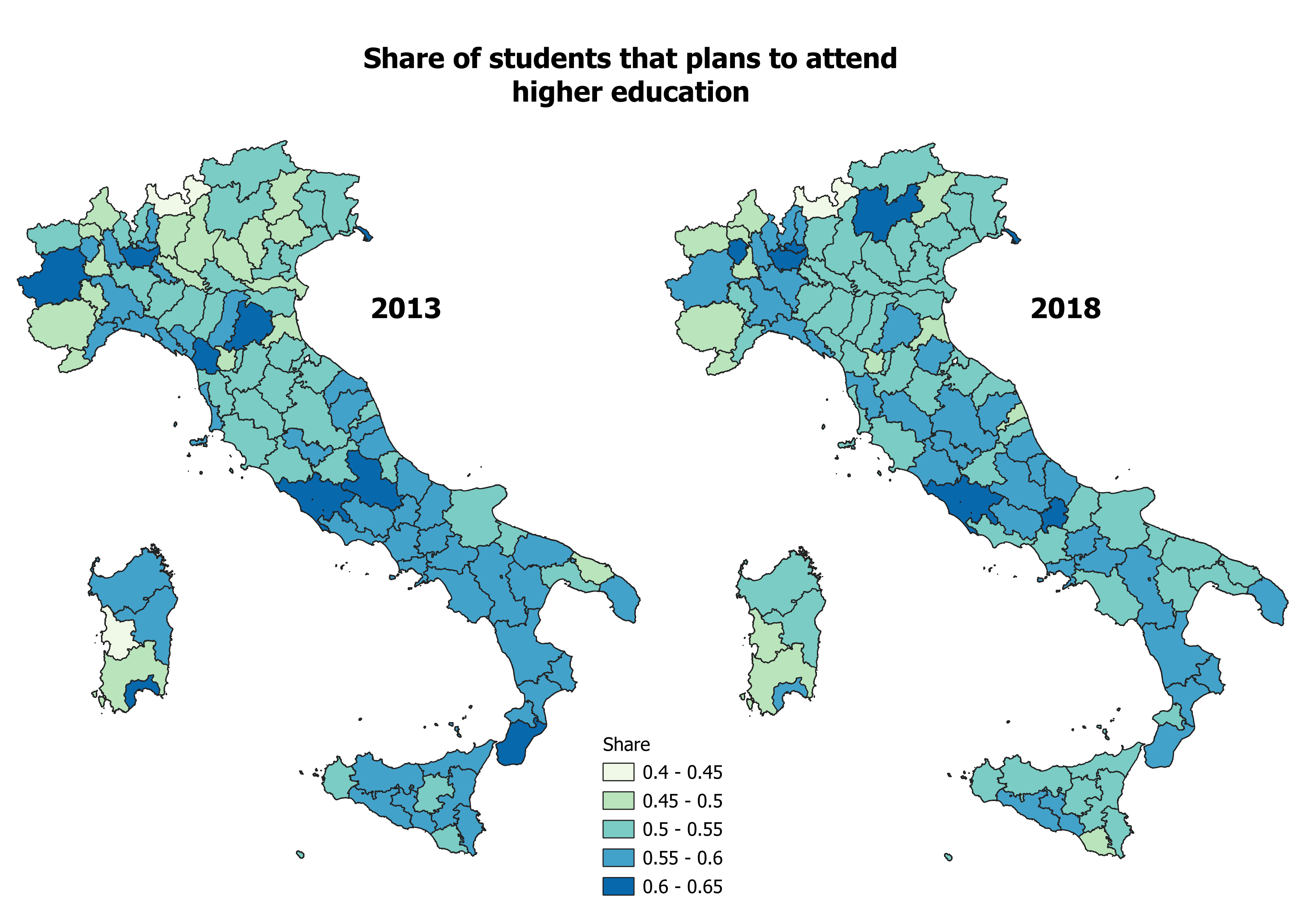
Educational aspirations play a central role in shaping social mobility, but the influence of contextual factors on aspiration formation remains poorly understood. This paper examines how socioeconomic inequality shapes students’ aspirations to pursue tertiary education, and whether this inequality matters more among peers or at a broader societal level. Drawing on theories of socially determined aspirations and social comparison, we argue that inequality may either discourage or stimulate aspirations and that its effects are likely to be stronger in proximate social environments. Using administrative microdata from the Italian INVALSI assessments covering approximately 2 million upper-secondary students, we construct an ordinal measure of socioeconomic inequality based on parents’ education and occupational skill levels and estimate linear probability models with school and year-fixed effects. The results show a robust positive association between school-level inequality and tertiary education aspirations, consistent with an aspiration-expanding mechanism. In contrast, inequality measured at broader territorial scales exhibits weaker and less stable effects. Overall, the findings highlight the importance of social proximity in shaping how inequality influences educational aspirations.
Speaker bio
Crhistian Joel González-Cuatianquis is a PhD candidate in Regional Science and Economic Geography at the Gran Sasso Science Institute (GSSI), with a background in economics. He previously worked at Mexico’s National Council for the Evaluation of Social Development Policy (CONEVAL), where he coordinated research and reports on social rights, the use of evaluations, and subnational social development policies.
His main research interests lie in the determinants of regional inequalities and their relationship with subjective well-being, educational aspirations, and perceptions of territorial and personal left-behindness. He combines microdata with econometric and spatial analysis techniques to examine how socioeconomic and territorial contexts shape individual perceptions and social outcomes, with empirical applications in Europe and Latin America.